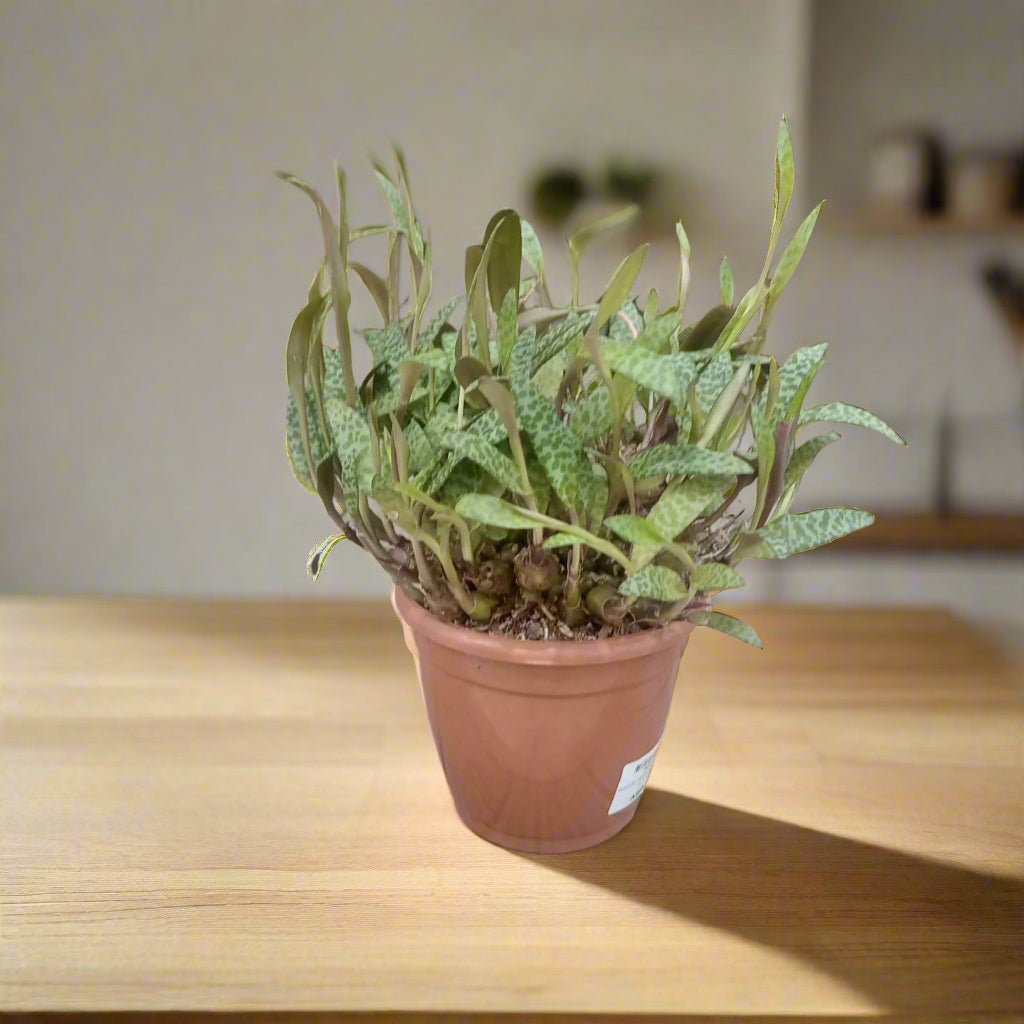
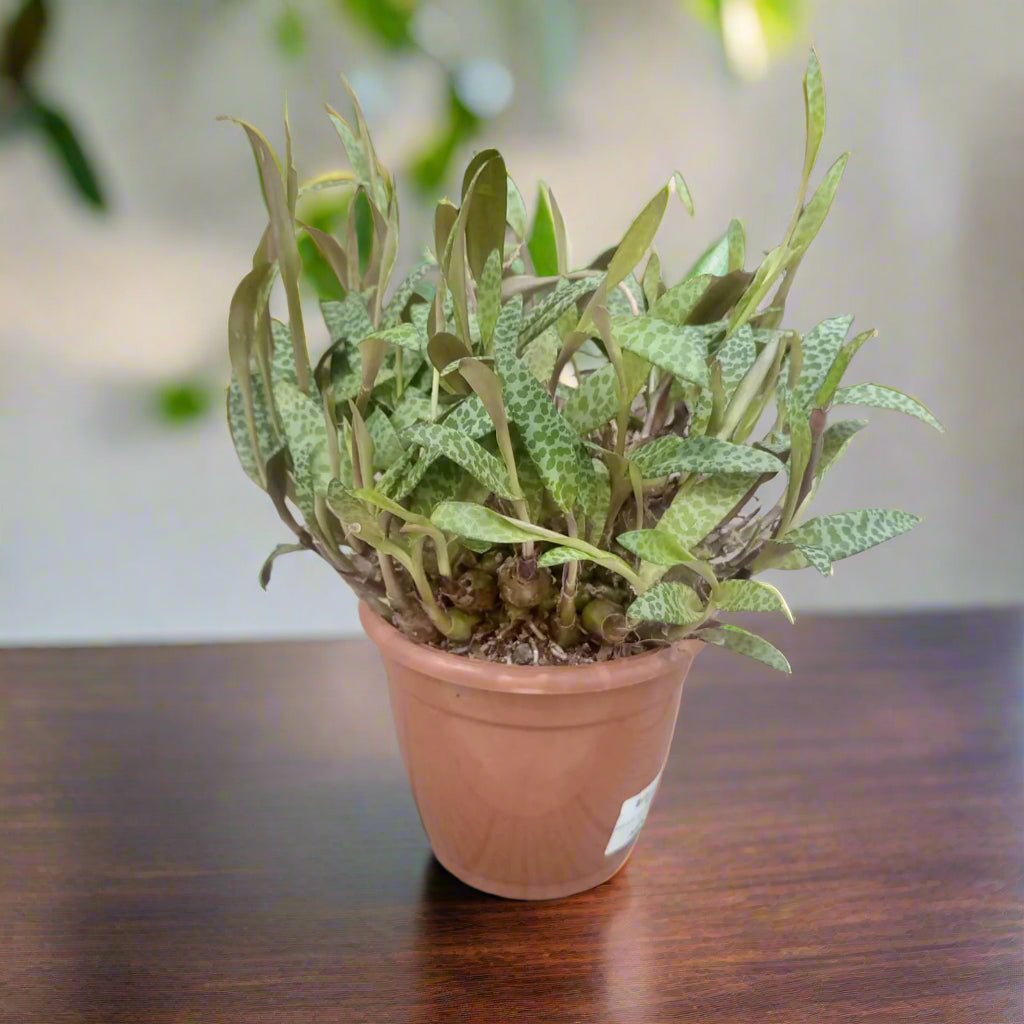
Indoor Ledebouria Socialis (Silver Squil)
Guarantee Safe Checkout
Website Exclusive - Free Delivery in Dubai & Sharjah
Free replacement if you receive a defective item during delivery
Indoor Ledebouria Socialis (Silver Squil)
Ledebouria socialis, commonly known as Silver Squill, is a unique and attractive bulbous plant prized for its speckled foliage and resilience. It's popular as a houseplant or in succulent collections.
🌿 Basic Information
Botanical Name: Ledebouria socialis
Common Names: Silver Squill, Wood Hyacinth, Leopard Lily
Family: Asparagaceae (formerly Hyacinthaceae)
Origin: South Africa
Type: Bulbous perennial
🍃 Foliage & Appearance
Leaves: Long, lance-shaped, silver leaves with green or purple spots. Undersides are often purplish.
Growth Habit: Grows from small bulbs that sit just above or slightly below the soil. Forms clumps or colonies over time.
Height: About 6–10 inches (15–25 cm) tall.
Flowers: Tiny, greenish or purplish star-shaped flowers on slender stalks in spring or summer.
☀️ Care Requirements
Light: Bright, indirect light is ideal. Can tolerate some direct sun. Too little light may reduce spotting.
Water: Water sparingly—let the soil dry out between waterings. Slightly more water in active growth periods (spring/summer), much less in winter.
Soil: Well-draining mix, similar to cactus or succulent soil.
Humidity: Not fussy; tolerates normal household humidity.
Temperature: Prefers warm conditions (60–85°F / 16–29°C). Protect from frost (min. 40°F / 4°C).
✂️ Care Tips
Dormancy: May go partially dormant in winter; reduce watering significantly if leaves die back.
Propagation: Easily propagated by dividing bulbs or separating offsets.
Pests: Generally pest-resistant, but occasionally susceptible to mealybugs or spider mites indoors.
Toxicity: Mildly toxic to pets if ingested.